
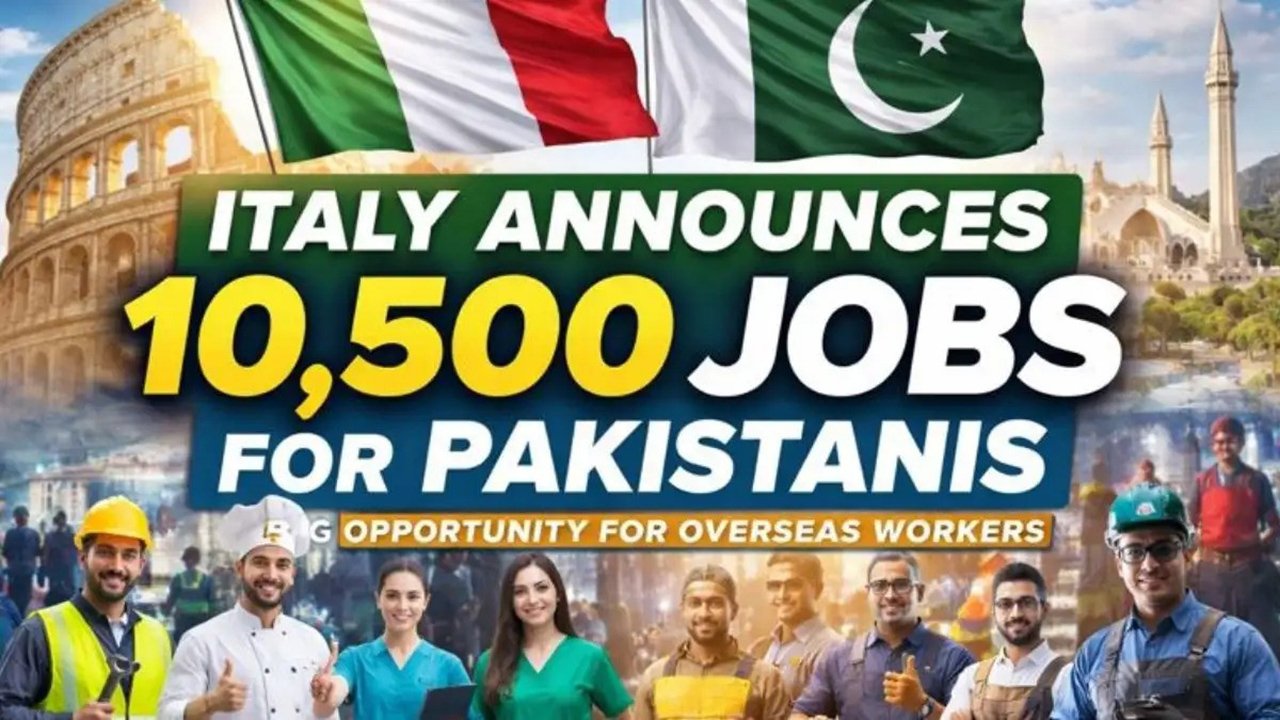
Italy opens 10500 jobs for Pakistani 2025. Italy has opened a rare legal pathway for Pakistani workers to Europe by allocating a quota of 10,500 jobs over the next three years, a move officials say could help curb illegal migration and provide regulated employment opportunities abroad. Under the arrangement, 3,500 Pakistani workers will be sent to Italy annually under both seasonal and non-seasonal employment schemes. According to the Ministry of Overseas Pakistanis and Human Resource Development.
Of the yearly quota, 1,500 workers will be hire for seasonal jobs. While 2,000 will be place in non-seasonal positions, The Express Tribune reported. Officials said Italy has become the first European country to formally open its labour market to Pakistan through a quota-based mechanism. A development that could pave the way for similar agreements with other EU states. According to the Economic Survey 2024–25, more than one million Pakistanis went abroad for work in a single fiscal year. Highlighting the country’s growing dependence on overseas employment and remittances.
Authorities say the Italian quota provides a legal and structured alternative to irregular migration. Which has surged in recent years. Illegal migration to Europe increased by 280% in 2022. With many Pakistanis attempting perilous journeys through Libya, Egypt, and other transit routes.
Xiaomi Watch 5 Premium Features Battery Life
According to official sources, these jobs will be offer under Italy’s legal work visa and quota system. Allowing Pakistani citizens to apply through approve and transparent channels. The vacancies are expecte to cover sectors such as agriculture, construction, manufacturing, hospitality, transportation, and caregiving, where Italy has been facing a shortage of workers. Further details regarding application dates, visa processes, and job categories are expecte to be announce in the coming months. This development is seen as a significant opportunity for Pakistanis aiming to work abroad legally while contributing to Italy’s economy.